What to Tell an Emergency Locksmith When You're Locked Out
Why the Right Information Matters
Being locked out of your home, car, or business is frustrating and often happens at the worst possible time. When you call an emergency locksmith, the speed and success of the job depend largely on how clearly you describe your situation. Giving precise details helps the locksmith arrive prepared with the right tools, which can save time, reduce disruption, and minimise any risk of damage to your door or lock. This article explains exactly what information you should have ready when you contact a lockout locksmith.
The Direct Answer: What You Need to Share
When you speak to an emergency locksmith, provide these key pieces of information: your exact location, the type of lock or door you have, whether the key is inside or broken off, any visible damage, and proof that you are the owner or authorised occupant. The more detail you give, the faster the locksmith can assess the job and bring the correct equipment. Below, each point is explained in practical terms.
Your Location and Access Details
Start with your full address, including any specific instructions for finding the property. If you live in a block of flats, mention the floor, door number, and any entry code or intercom system. For a commercial property, note the building name or unit number. If the property is hard to locate at night, a landmark or nearby junction helps. The locksmith needs this to plan the quickest route and to know what access challenges to expect.
The Type of Lock and Door
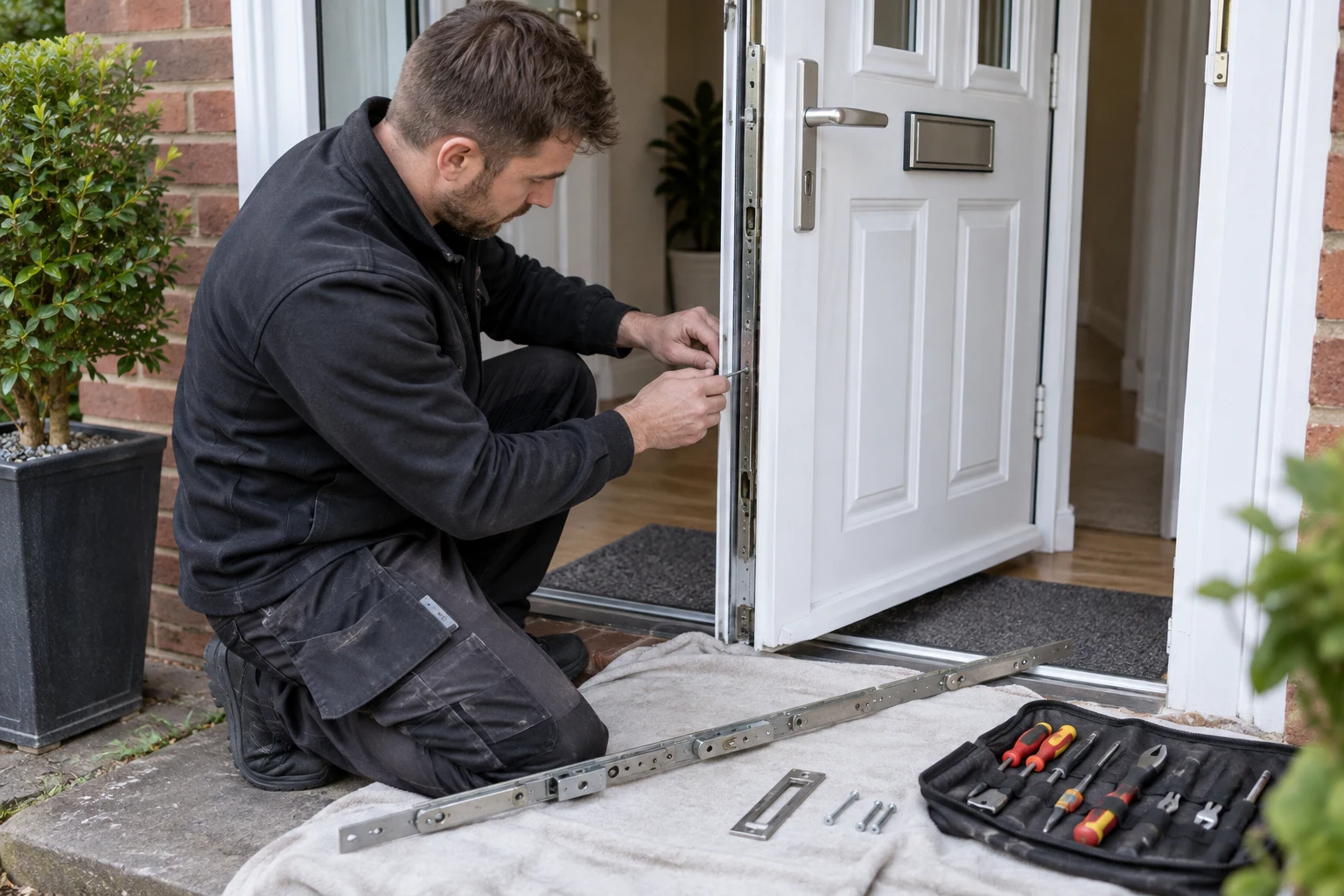
Describe the lock you are dealing with. Common types include a euro cylinder, a mortice lock, a rim lock, or a multipoint locking system on a uPVC door. If you are unsure, describe the door: is it wooden, metal, or uPVC? Does it have a letterbox, a spyhole, or a handle that turns? The locksmith can often identify the lock from your description. For vehicle lockouts, mention the car make, model, and year, and whether the key is in the ignition or lost.

A euro cylinder is a standard lock cylinder often found on modern uPVC doors. If the key is stuck or has snapped off in a euro cylinder, the locksmith may need to remove the cylinder carefully. For mortice locks, which are embedded inside the door edge, the risk of damage to the door itself is lower, but the locksmith still needs to know the size and type. Telling the locksmith about the door latch and locking mechanism helps them decide whether to pick the lock, drill it, or use a bypass tool.
The Nature of the Lockout
Explain exactly how you got locked out. Did you leave the key inside? Did the key break in the lock? Has the lock jammed while you were trying to turn it? Each scenario needs a different approach. If the key is on the inside and the door has a snib lock, the locksmith may be able to slide a tool under the door to push the snib. If the key is broken off, the locksmith might extract the broken piece before attempting to open the lock. If the lock is simply seized, lubrication or gentle manipulation may be enough.
If the door is bolted from the inside, or if there is a security chain engaged, mention that too. A lockout locksmith can usually deal with these situations, but they need to know in advance so they can bring the right tools. For example, a chain can be cut with bolt cutters, but the locksmith should be aware that the door might be vulnerable if the chain is removed carelessly.
Proof of Identity and Ownership
Most reputable emergency locksmiths will ask for proof that you are the owner or an authorised occupant. This is a standard security check to prevent unauthorised entry. Have ready a form of photo ID, such as a driving licence or passport. If you do not have ID on you, a recent utility bill or bank statement with the property address can serve as proof of address. Tenants can show a rental agreement or a letter from the landlord. If you cannot provide any of these, the locksmith may still help, but they might require a witness or additional verification. Being prepared with this information speeds up the process.
Any Visible Damage or Existing Issues
If the door or lock already shows signs of damage, tell the locksmith. A warped door, a loose handle, or a lock that has been repaired before could affect how the locksmith approaches the job. Also mention any recent changes: a new door fitted, a lock replaced, or a security upgrade. This background helps the locksmith avoid making the problem worse. For instance, if the door has drill protection built in, the locksmith might avoid drilling altogether and instead use a specialised picking method.
What to Expect During the Process
When the locksmith arrives, they will assess the situation quickly. They may try non-destructive methods first, such as lock picking or using a bypass tool. If those fail, they may need to drill the lock, which can cause access damage. That is usually a last resort because it means the lock will need replacing. The locksmith will explain the options and give you a clear idea of the likely cost before starting work. You are not obliged to accept the work, and a reputable locksmith will always give you a quote upfront.
If drilling is unavoidable, the locksmith will replace the lock with a new one, often a euro cylinder or a complete lock body. They may also check the door latch and adjust it if it was misaligned. After the job, test the new lock to ensure it works smoothly. Keep the new key safe, and consider having a spare key with a trusted neighbour or family member.
After the Lockout: Prevention Tips
Once you are back inside, take a few simple steps to avoid a repeat lockout. Always carry a spare key in your bag or coat pocket. If you have a digital key safe, store a spare key outside securely. For vehicles, keep a spare key in your wallet or with a partner. If your lock is old or stiff, have it serviced before it seizes completely. A well-maintained locking mechanism is less likely to fail at the worst moment.
If you have recently moved into a property, consider changing the locks. You never know how many copies of the old keys exist. A locksmith can rekey the lock or install a new euro cylinder quickly. This gives you peace of mind and ensures that only you and your family have access.
When to Call a Professional
Not every lockout requires a locksmith. If the door is simply stuck due to humidity or a swollen frame, you might be able to free it yourself by gently tapping the frame or using a lubricant. But if the lock is damaged, the key is broken, or you cannot get in without forcing the door, call a professional. Attempting to force a door can cause significant damage to the frame, the door, and the lock, often costing more than a locksmith's visit. A lockout locksmith is trained to open doors with minimal damage, and they carry insurance in case something goes wrong.
In an emergency, such as a gas leak or a fire, do not wait for a locksmith. Prioritise your safety and call the emergency services immediately. Once the immediate danger is over, then call a locksmith to secure the property.
Final Practical Reminders
Keep your phone charged and the locksmith's number saved in your contacts. If you are locked out at night, stay calm and wait in a safe place nearby. Do not attempt to climb through windows or use makeshift tools that could injure you. The locksmith will handle the rest. By having the information described above ready, you make the process smoother for everyone involved.